Publications

Resilience Center Denmark produces publications that share research results, practical insights, and lessons learned from projects and collaborations. These include reports and analytical papers focused on critical infrastructure resilience and broader societal resilience.

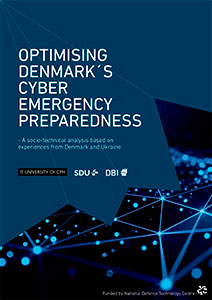
Optimising Denmark´s Cyber Emergency Preparedness

This project is funded by the National Defence Technology Center (NFC) and conducted in collaboration between ITU, SDU, and DBI. It examines Denmark’s preparedness to defend against cyberattacks on critical infrastructure, with a particular focus on telecommunications. Based on 27 interviews with Danish and Ukrainian stakeholders, the report demonstrates how cyberattacks on telecom systems can disrupt essential societal functions and trigger cascading effects across sectors such as healthcare. Drawing on lessons from Ukraine, the project identifies key cyber threats, systemic vulnerabilities, and the need for multi-layered zero trust strategies, strong organisational practices, and cross-sector collaboration.

Download the report to explore the findings and recommendations in full.

Download

This project is funded by the National Defence Technology Center (NFC) and conducted in collaboration between ITU, SDU, and DBI. It examines Denmark’s preparedness to defend against cyberattacks on critical infrastructure, with a particular focus on telecommunications. Based on 27 interviews with Danish and Ukrainian stakeholders, the report demonstrates how cyberattacks on telecom systems can disrupt essential societal functions and trigger cascading effects across sectors such as healthcare. Drawing on lessons from Ukraine, the project identifies key cyber threats, systemic vulnerabilities, and the need for multi-layered zero trust strategies, strong organisational practices, and cross-sector collaboration.

Download the report to explore the findings and recommendations in full.

Download


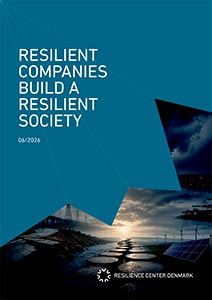
Resilient businesses create a resilient society.

The new geopolitical reality—war in Europe, hybrid attacks, disrupted supply chains, and climate extremes—has made resilience a competitive parameter on par with efficiency. Customers, insurers, and public authorities are increasingly demanding documented proof of an organisation’s ability to deliver under pressure. With the EU’s Preparedness Union Strategy, published in March 2025, a European market for tested resilience solutions has emerged. Danish businesses are well positioned to seize this opportunity, but the necessary solutions do not yet exist as off-the-shelf products. They must be developed, tested, and validated at a pace that matches the evolving threat landscape. This requires four things: faster translation of research into practice, cross-sector collaboration in development, access to realistic testing environments, and independent validation. Denmark already possesses the professional capacity needed to meet these challenges through its network of GTS institutes and, across the resilience domain, through Resilience Centre Denmark. This white paper describes how that capacity can be brought into play and outlines the steps individual companies can begin taking today.

The report is in Danish. 

Download

Resilient businesses create a resilient society.

The new geopolitical reality—war in Europe, hybrid attacks, disrupted supply chains, and climate extremes—has made resilience a competitive parameter on par with efficiency. Customers, insurers, and public authorities are increasingly demanding documented proof of an organisation’s ability to deliver under pressure. With the EU’s Preparedness Union Strategy, published in March 2025, a European market for tested resilience solutions has emerged. Danish businesses are well positioned to seize this opportunity, but the necessary solutions do not yet exist as off-the-shelf products. They must be developed, tested, and validated at a pace that matches the evolving threat landscape. This requires four things: faster translation of research into practice, cross-sector collaboration in development, access to realistic testing environments, and independent validation. Denmark already possesses the professional capacity needed to meet these challenges through its network of GTS institutes and, across the resilience domain, through Resilience Centre Denmark. This white paper describes how that capacity can be brought into play and outlines the steps individual companies can begin taking today.

The report is in Danish. 

Download